Sensing From the Ground Up: The Volunteer Networks Quietly Rewiring American Climate Science
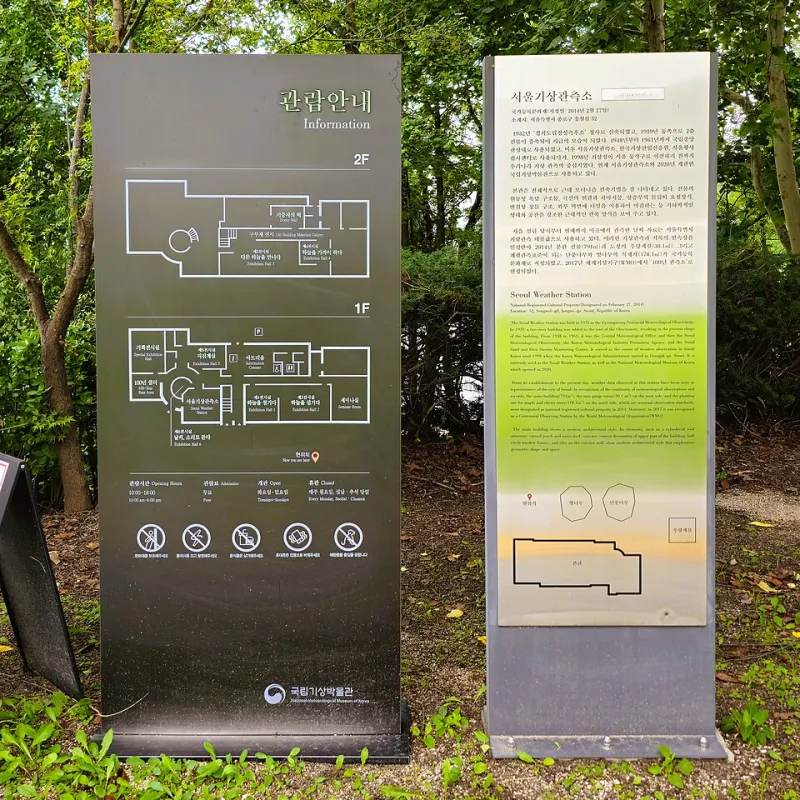
Photo: Provenancesonde, CC0, via Wikimedia Commons
On a soybean field outside Ames, Iowa, a soil moisture probe the size of a flashlight beam transmits readings every fifteen minutes. Its owner is not a university researcher but a third-generation farmer who bought the sensor for less than the cost of a tank of diesel. His measurements, along with those of tens of thousands of other Americans, are now flowing into datasets that climate scientists increasingly treat as legitimate evidence.
This is not a fringe phenomenon. Community-operated environmental monitoring has grown into one of the most significant developments in observational science of the past decade, and it is happening largely outside the traditional grant apparatus.
The Coverage Problem Volunteers Are Solving
The National Weather Service cooperative observer program and the USDA's soil climate network do vital work, but official stations are sparse. Much of the interior West has fewer long-term monitoring sites per square mile than a single New Jersey county. For a farmer deciding when to irrigate, or a county emergency manager modeling flash flood risk, the nearest federal gauge may be an hour's drive and a world of difference away.
Low-cost consumer sensors have changed the arithmetic. Networks built around affordable weather stations now report observations from millions of devices across the continental United States, with dense clusters in suburban Phoenix, the Texas Triangle, and the Great Plains — precisely the places where official coverage thins out.
From Curiosity to Citation
The critical question is not whether this data exists but whether it can be trusted. Early skepticism from the research community was warranted: uncalibrated instruments, poor siting next to air conditioners or asphalt, and inconsistent reporting all threaten data integrity.
What has changed is methodology. Researchers now routinely apply bias-correction algorithms that compare each device against nearby reference stations, flag statistical outliers, and weight observations by demonstrated reliability. Studies published in hydrology and meteorology journals have shown that, after quality control, crowdsourced precipitation totals can approximate the accuracy of professional networks during heavy rainfall events — the very events where sparse coverage hurts most.
Air quality tells a similar story. Community monitors deployed in neighborhoods near industrial corridors, from Houston's Ship Channel to refineries along the Delaware River, have given residents and public health researchers ground-level readings that regulatory monitors, often miles away, cannot capture.
What Trustworthiness Requires
For volunteer-sourced data to keep earning citations, several standards matter:
- Documented provenance. Every observation should carry metadata: device model, firmware, installation context, and calibration history.
- Open validation pipelines. The correction algorithms applied to raw readings should be published and reproducible, not proprietary black boxes.
- Persistent archiving. Data that lives only in a manufacturer's cloud is one bankruptcy away from vanishing. Independent repositories must preserve raw and corrected streams.
- Clear labeling. Peer-reviewed work should distinguish between professionally calibrated and community-sourced observations rather than blending them silently.
An Open Science Story
The citizen sensor movement is, at its core, an open science success — data collected by the public, processed transparently, and returned to the public as evidence. The task ahead is institutional: universities, agencies, and repositories building the plumbing that treats a backyard station not as a novelty but as part of the national observing system. The instruments are already in the ground. What remains is the discipline to keep the record honest.