Disconnected by Design: The Federal Data Gap Costing American Agriculture Billions
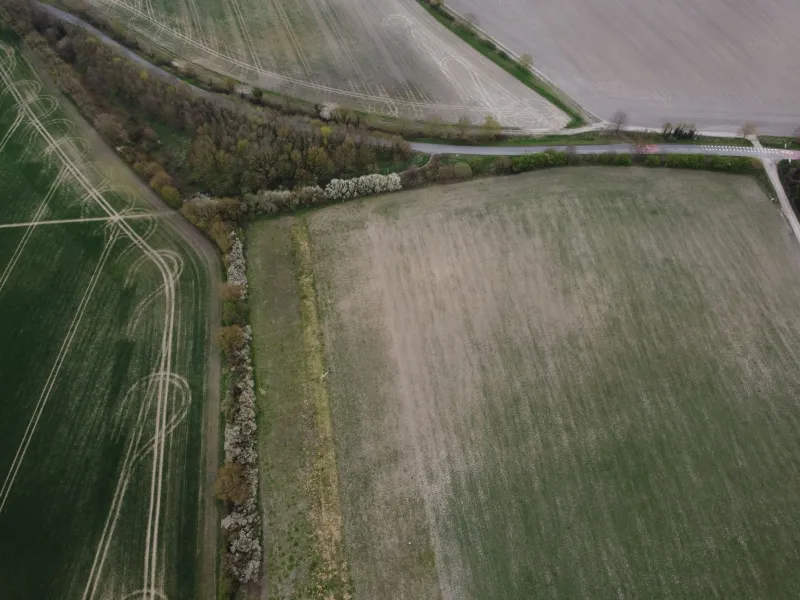
The United States spends approximately $40 billion annually on agricultural support programs, crop insurance, and farm subsidies — a figure that reflects both the economic weight of domestic food production and the government's stated commitment to protecting it. Alongside that investment sits a parallel federal enterprise: a sprawling architecture of climate monitoring, weather modeling, and environmental data collection managed by agencies including NOAA, NASA, and the EPA. These two data ecosystems are, by any reasonable scientific standard, inseparable. Drought patterns determine yield. Shifting precipitation cycles reshape planting calendars. Extreme heat events compress growing seasons in ways that ripple through commodity markets for years.
And yet, for researchers attempting to connect these two bodies of evidence, the experience is less like working within a unified national scientific infrastructure and more like translating between foreign languages without a dictionary.
Two Systems That Should Be One
The core problem is not that the data does not exist. NOAA's National Centers for Environmental Information maintains some of the most comprehensive atmospheric and oceanic records on the planet. The USDA's National Agricultural Statistics Service publishes detailed crop yield, acreage, and production data at the county level going back decades. NASA's Earth Observing System produces satellite-derived land surface temperature and soil moisture datasets with remarkable spatial resolution.
The problem is interoperability. Each of these systems was built independently, funded independently, and optimized for the internal needs of the agency that created it. NOAA's gridded climate datasets are structured around geographic coordinate systems that do not align cleanly with the county-level reporting boundaries used by USDA. NASA's satellite products operate on temporal resolutions that frequently do not match the seasonal reporting cycles that agricultural statisticians rely upon. Even when researchers identify data products that should theoretically speak to the same question, reconciling them demands months of preprocessing, normalization, and methodological improvisation — work that is rarely funded, rarely credited, and almost never shared in a reusable form.
Dr. Maria Ruiz, a climate-agricultural systems researcher at a land-grant university in the Midwest, described the situation plainly in a 2023 working paper circulated among colleagues: "We are not lacking observations. We are lacking the connective tissue between them. Every research team rebuilds the same bridge from scratch, and then that bridge disappears when the project ends."
The Missed Science
The cost of this fragmentation is not abstract. Consider the science of heat stress on pollination — a well-documented mechanism by which extreme temperature events during critical crop development windows cause yield losses that cannot be recovered regardless of subsequent conditions. Researchers studying this phenomenon need high-resolution temperature data aligned precisely with crop phenology records, county-level yield outcomes, and irrigation status information. Each of these data streams exists. Assembling them into an analyzable dataset requires navigating at least three separate federal portals, reconciling at least two incompatible spatial frameworks, and filling gaps where agency reporting cycles simply do not overlap.
The result is that published research on heat stress and crop yield tends to be geographically narrow, temporally limited, or both. Studies that could inform national crop insurance pricing, federal disaster designation criteria, or USDA conservation program targeting instead produce findings too constrained to generalize. The science exists. The policy application evaporates.
Similar dynamics play out across the full range of climate-agricultural intersections: drought and groundwater depletion, shifting frost dates and orchard crop viability, extreme precipitation events and soil erosion. In each case, the data to study these relationships at scale is nominally public. In practice, it is functionally inaccessible to any research team without substantial time, technical capacity, and funding specifically dedicated to data harmonization — resources that most university research groups do not have.
What Interoperability Would Unlock
The scientific community has not been silent on this gap. The Federation of Earth Science Information Partners, the Consortium of Universities for the Advancement of Hydrologic Science, and multiple USDA-funded research centers have published frameworks and recommendations for cross-agency data alignment. The 2023 National Climate Assessment dedicated a section to the need for integrated food-climate data systems. Congressional testimony from agricultural economists has repeatedly flagged the issue.
What a genuinely unified federal climate-agricultural data infrastructure would enable is difficult to overstate. Machine learning models trained on harmonized, high-resolution datasets could substantially improve seasonal yield forecasts — giving farmers, commodity traders, and federal program administrators lead time to respond to emerging production shortfalls. Long-run trend analysis connecting decadal climate shifts to regional crop viability could inform where federal conservation investments are most urgently needed. Epidemiological-style studies linking weather events to food price spikes could reshape how economists model inflation risk in agricultural commodity markets.
None of this requires data that does not currently exist. It requires the institutional will to build and maintain the infrastructure that makes existing data usable together.
The Institutional Barriers Are Not Technical
Engineers and data scientists who have worked across federal agencies are consistent in their assessment: the technical challenges of integrating climate and agricultural data are significant but tractable. Common spatial reference frameworks, standardized metadata schemas, and federated API architectures are well-understood solutions. The barriers are organizational.
Agency budgets are structured around agency missions. NOAA's appropriations are justified by NOAA's outputs. USDA's data programs serve USDA's constituencies. Cross-agency data harmonization projects require sustained investment that does not map cleanly onto either agency's core mandate — and in the current federal funding environment, sustained investment in infrastructure that benefits everyone but is owned by no one is precisely the kind of commitment that tends to fall through the cracks.
The Biden administration's establishment of an interagency working group on climate and agriculture data integration represented a meaningful acknowledgment of the problem. Whether that working group produces durable institutional change — or becomes another well-intentioned initiative that outlasts its political moment by only a few budget cycles — remains an open question.
A Foundation, Not a Fix
For the research community, the immediate practical need is not a comprehensive federal solution. It is the creation and maintenance of openly accessible, well-documented crosswalk datasets: translation layers that allow researchers to align existing federal data products without rebuilding that alignment from scratch each time. Several academic groups and nonprofit data organizations have begun producing exactly this kind of resource, making them freely available under open licenses.
These efforts deserve recognition, funding, and institutional support. They also deserve to be treated as what they are: emergency infrastructure filling a gap that federal agencies should be filling themselves. The data connecting America's climate future to its agricultural present exists. Making it discoverable, interoperable, and genuinely usable is not a technical problem. It is a policy choice — and the cost of not making it is measured in both research years wasted and farming communities left to adapt without the information they need.