Preserved but Unreachable: The University Vaults Where Decades of Research Data Quietly Disappear
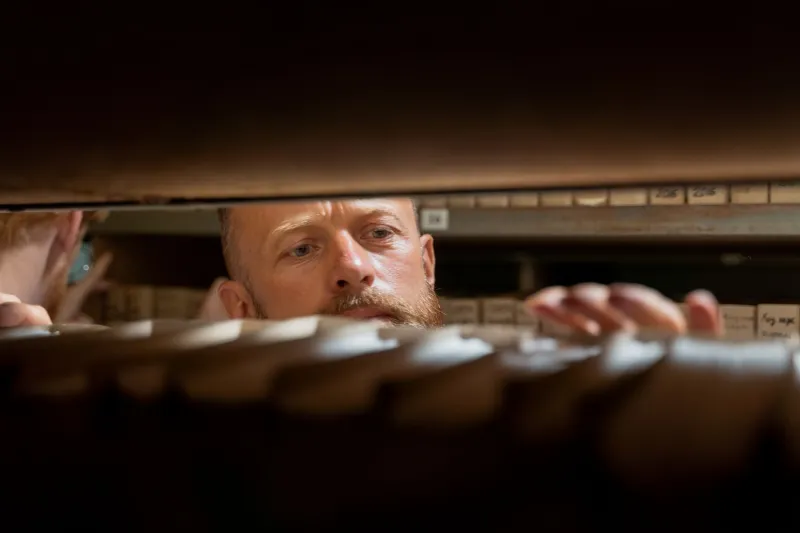
In the basement of a large midwestern research university, rows of magnetic tape reels sit in climate-controlled cabinets. They contain longitudinal health survey data collected over two decades — thousands of patient records, carefully anonymized, representing one of the most comprehensive community health studies ever conducted in the region. The data has not been accessed by an external researcher in eleven years. It is preserved. It is catalogued. And for nearly any practical scientific purpose, it does not exist.
This is not an isolated case. Across American universities, physical and digital storage systems hold enormous quantities of research data that institutions are simultaneously unwilling to discard and unable — or unwilling — to make genuinely accessible. The result is a paradox that costs millions of dollars annually in maintenance while delivering almost nothing in scientific value: preservation as performance, archival without access.
The Infrastructure of Inaccessibility
University archives have grown substantially over the past three decades, driven by federal mandates requiring data retention, evolving institutional review board protocols, and a general cultural shift toward documentation. Many institutions now maintain dedicated data management offices, server farms, and even physical cold-storage facilities to house research outputs from funded projects.
The costs are not trivial. A mid-sized research university might spend between $400,000 and $1.2 million annually on data storage infrastructure, depending on the volume and format diversity of its holdings. That figure typically excludes staff time for cataloguing, compliance monitoring, and responding to the occasional access request.
Yet the fraction of archived material that is meaningfully discoverable — tagged with sufficient metadata, formatted in current standards, and accompanied by documentation that would allow an independent researcher to actually use it — is, by most estimates, strikingly small. A 2022 survey of research data management practices at fifty-three U.S. universities found that fewer than 30 percent of archived datasets contained enough contextual documentation to support reuse without direct contact with the original research team. In cases where the principal investigator had left the institution, that number dropped below 12 percent.
Liability as the Invisible Gatekeeper
When archivists and data managers are asked why collections remain locked, the answer is rarely a single policy failure. More often, it is a layered accumulation of institutional risk aversion.
Medical and health-related datasets present the most acute challenges. Even when data has been de-identified in accordance with HIPAA standards, institutions frequently impose additional access controls out of concern that re-identification technologies have advanced since the original anonymization was performed. Legal counsel at many universities has advised blanket restrictions on external access to any dataset involving human subjects collected before 2010 — a category that encompasses a substantial portion of the most scientifically valuable longitudinal research in existence.
The practical consequence is that datasets which could inform current research on chronic disease, environmental health exposure, or health disparities are held in a kind of indefinite legal quarantine. Researchers who inquire about access are frequently directed through multi-step review processes that can take six months or longer, with no guarantee of approval. Many simply abandon the effort.
"The institution's first instinct is always to protect itself," said one data manager at a large public research university, speaking on background. "Sharing a dataset creates exposure. Keeping it locked creates none. The incentive structure doesn't reward openness — it punishes it."
The Metadata Problem Underneath the Access Problem
Even when institutions are willing to share, the data itself often cannot be used. Archival philosophy at most universities has historically prioritized storage over documentation. Data files are retained; the contextual knowledge required to interpret them frequently is not.
Variable codebooks written in obsolete software formats. Collection protocols stored only in the memory of researchers who have since retired. Geographic identifiers that reference administrative boundaries that no longer exist. These are not edge cases — they are routine features of datasets archived before modern data management standards became widespread.
The scientific cost of this documentation deficit is difficult to quantify precisely, but its direction is unambiguous. A dataset without adequate provenance documentation cannot be replicated, cannot be meaningfully merged with other data sources, and cannot be properly cited in subsequent research. It occupies server space and staff attention while contributing nothing to the cumulative scientific record.
Some institutions have launched retrospective documentation projects, hiring graduate students or postdoctoral researchers to reconstruct metadata for high-priority legacy datasets. These efforts are valuable, but they are also expensive, slow, and dependent on the same uncertain funding cycles that created the original problem.
When Preservation Becomes an End in Itself
There is a philosophical dimension to this problem that extends beyond policy and infrastructure. Archival culture within universities has, in many departments, treated preservation as the terminal goal of data stewardship rather than as a means to ongoing scientific utility. The act of retaining data satisfies compliance requirements, demonstrates institutional responsibility, and generates no immediate controversy — regardless of whether that data ever serves another researcher.
This framing is not without its defenders. Some archivists argue that the value of preserved data is genuinely unpredictable, and that collections maintained today may become accessible through future technological or policy changes. There is historical precedent for this view: datasets archived on obsolete media formats have occasionally been recovered through dedicated digitization efforts, and re-identification concerns that currently restrict access may eventually be resolved by more sophisticated anonymization techniques.
But this argument has limits. Data that is preserved without documentation degrades in scientific usefulness over time, even if its physical medium remains intact. The researchers who understood its collection context retire or die. The institutional memory of what a particular variable actually measured fades. Preservation without investment in ongoing accessibility is, in practice, a slow-motion form of loss.
What Open Science Infrastructure Actually Requires
The contrast with genuinely open data repositories is instructive. Platforms designed from the outset for data sharing — including domain-specific repositories in genomics, climate science, and epidemiology — have demonstrated that accessibility is achievable when it is treated as a design requirement rather than an afterthought. These systems mandate standardized metadata at the point of deposit, require documentation of collection protocols, and build access controls that permit appropriate use rather than defaulting to prohibition.
Adapting these principles to university archives is not straightforward. Institutional repositories serve heterogeneous collections across dozens of disciplines, making standardization difficult. Legacy holdings present documentation challenges that purpose-built repositories were designed to avoid. And the funding models that sustain open repositories — often dependent on federal grants or consortium arrangements — are not easily replicated within individual university budgets.
Nevertheless, the gap between what university archives hold and what the scientific community can actually use represents a significant and largely unacknowledged failure of research infrastructure. The investment required to close that gap — in documentation, in access systems, in legal frameworks that permit appropriate data sharing — is substantial. The cost of not making it is larger still.
Data that sits unreachable in a university basement is not preserved science. It is science that has been given the appearance of preservation while being denied the conditions that would make it science at all.