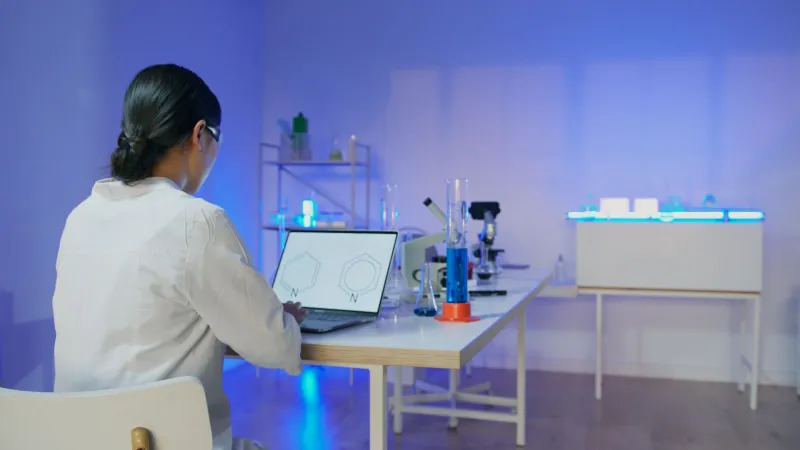
When the Scientist Leaves, the Science Follows: The Institutional Failure Erasing Decades of Research Data
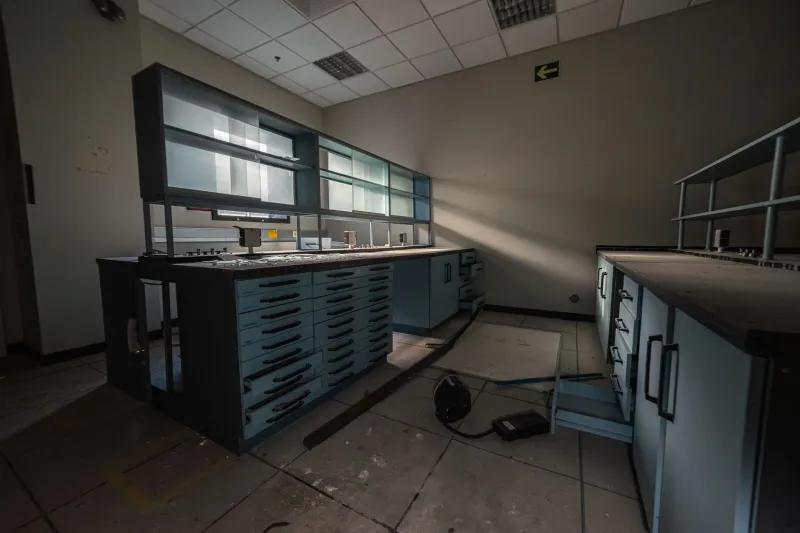
A Retirement Party Nobody Planned For
Every spring, American research universities celebrate the careers of departing faculty with receptions, commemorative volumes, and formal acknowledgments of scholarly contribution. What those ceremonies rarely include is any structured conversation about what happens to the data those researchers spent careers collecting. Hard drives are boxed up or discarded. Laboratory notebooks are carried home. Shared network folders are quietly archived — or simply deleted — by IT departments following standard offboarding protocols.
The result is a form of institutional amnesia that plays out thousands of times each year across the country's research landscape. A principal investigator who spent thirty years building a longitudinal dataset on, say, post-surgical infection outcomes or soil microbiome composition walks out the door, and the data walks out with them. The published papers remain. The underlying evidence does not.
The Ownership Problem That Predates the Data Crisis
American academic culture has historically assigned informal custodial ownership of research data to the investigator who generated it. This convention predates the digital era, when data lived in physical notebooks and filing cabinets that naturally traveled with their creators. The norms never fully updated when data became digital, networked, and potentially shareable at negligible cost.
The consequences are now structurally embedded. Federal funding agencies, including the National Institutes of Health and the National Science Foundation, have for years required data management plans as a condition of grant awards. But those plans typically address data sharing during the active grant period. What happens to datasets after a project closes — and especially after the principal investigator leaves the institution — remains poorly governed at most universities.
A 2022 survey conducted by a consortium of research data librarians across twelve land-grant universities found that fewer than a third of responding institutions had a formal written policy specifically addressing the disposition of research data when a faculty member retires or otherwise separates from the institution. Among those that did, enforcement mechanisms were described as inconsistent at best.
Racing Against the Clock in the Stacks
For researchers who specialize in data recovery and digital preservation, the departure of a long-tenured investigator triggers something close to an emergency response. Data librarians at several large research universities describe a recurring pattern: a department chair mentions in passing that a colleague is retiring, and the preservation team has weeks — sometimes days — to identify, catalog, and transfer materials before they are lost.
The challenge is not purely logistical. Decades-old datasets often exist in formats that require specialized software to open, software that may itself be obsolete. Metadata describing how samples were collected, how variables were coded, or how instruments were calibrated may exist only in the memory of the departing researcher or in handwritten notes that have never been digitized. Without that contextual layer, the raw data becomes scientifically inert — present in a technical sense, but uninterpretable by anyone who was not there when it was created.
This problem is particularly acute in fields where datasets accumulate over long time horizons. Longitudinal clinical cohort studies, multi-decade environmental monitoring programs, and iterative agricultural trials represent investments of public funding that can reach into the tens of millions of dollars. The loss of a single senior investigator's records can render years of that investment unreproducible.
The Successor's Dilemma
Even when a retiring researcher is willing to transfer their data, the receiving institution faces its own set of complications. Junior faculty inheriting a lab may lack the storage infrastructure, the technical capacity, or the institutional support to properly curate a large legacy dataset. Graduate students who worked most closely with the data have often dispersed to other institutions by the time succession becomes urgent. The informal knowledge networks that made a dataset usable — knowing which graduate student recoded a variable in 2009, or which instrument was replaced mid-study — dissolve when the people who held that knowledge move on.
Some institutions have begun assigning data stewardship responsibilities to research data management teams rather than relying on individual investigators to self-manage succession. Under this model, a designated staff member works alongside the research team throughout the life of a project, building documentation and metadata in real time rather than attempting to reconstruct it retrospectively. When the principal investigator eventually departs, the institutional record is already complete.
The University of Michigan, Oregon Health and Science University, and several other research-intensive institutions have implemented variations of this approach, embedding data management personnel within research units rather than housing them exclusively in library or IT departments. Early assessments suggest the model reduces the risk of catastrophic data loss at transition points, though it requires sustained investment in staffing that not all institutions are positioned to make.
Policy Without Teeth
Federal policy has begun to apply more pressure. The NIH's 2023 data management and sharing policy, which took effect in January of that year, significantly expanded requirements for data sharing across funded research. It does not, however, directly address what happens to shared data repositories when the investigator who created them retires. Repository maintenance, long-term access guarantees, and succession of custodial responsibility remain areas where policy guidance is thin.
Advocates for stronger protections argue that the problem requires intervention at the institutional level, not just the federal one. University promotion and tenure systems have historically rewarded publication over data stewardship, creating a structural disincentive for investing time in the kind of careful documentation that makes a dataset survivable beyond its creator's tenure. Changing that calculus requires institutional will — and, in many cases, a willingness to allocate resources to work that generates no direct publication credit.
What Gets Lost Cannot Always Be Recovered
For some datasets, the window for recovery has already closed. Researchers attempting to reconstruct longitudinal studies from published papers alone describe a process of forensic approximation — piecing together what the original data must have looked like from the partial evidence that survives in print. In fields where the underlying phenomena are themselves changing, such as climate-sensitive agricultural systems or evolving pathogen populations, historical datasets that cannot be recovered represent gaps in the scientific record that cannot be filled retroactively.
The researchers most acutely aware of this reality are often those who have spent time trying to replicate published findings, only to discover that the data necessary to complete that work no longer exists in any accessible form. The published paper persists. The foundation beneath it has quietly crumbled.
Open science infrastructure — repositories, persistent identifiers, standardized metadata schemas — exists precisely to prevent this outcome. But infrastructure is only as effective as the institutional practices that feed into it. Until universities treat the transition of a senior researcher's departure as a data stewardship event requiring the same planning as a laboratory renovation or a grant closeout, the ghost lab problem will continue to extract its quiet toll on the scientific record.
The data that built careers deserves an institutional home that outlasts the career that built it.