Methodology Under Lock and Key: The Proprietary Protocols Undermining Environmental Science
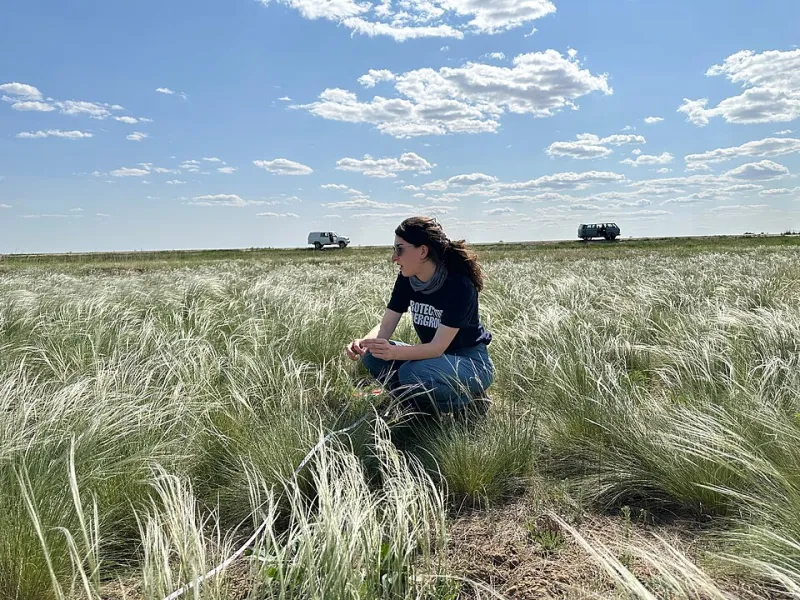
Photo: Science and such, CC0, via Wikimedia Commons
In the spring of 2021, a team of independent researchers at a mid-sized public university in Ohio attempted to replicate a widely cited air quality study conducted by a private environmental monitoring firm contracted by a regional utility company. The original study had informed state regulators' decision to permit expanded operations at a coal ash storage facility near a predominantly low-income community. The independent team had the personnel, the equipment, and the funding. What they did not have—and could not obtain—were the precise sampling protocols the firm had used to collect its particulate matter measurements.
The firm declined to share its methodology, citing proprietary business interests. The regulators who had relied on the study did not require disclosure. The replication effort stalled.
This scenario is not an anomaly. It is, by many accounts, a defining feature of contemporary environmental science in the United States.
The Methodology Gap in Environmental Research
Environmental science occupies an unusual position in the broader scientific landscape. Its findings carry immediate, tangible consequences for communities, industries, and policymakers. Yet the field operates across a fragmented ecosystem of public agencies, private contractors, academic institutions, and advocacy organizations, each with distinct incentive structures governing what data gets shared and under what terms.
Proprietary protocols—the specific, often highly technical procedures by which environmental samples are collected, processed, and interpreted—represent one of the most consequential and least discussed sources of that fragmentation. Unlike a published paper, where at least the headline findings are visible, a proprietary protocol may never surface in any public document. Researchers downstream have no way to assess whether the methods were appropriate, whether they introduced systematic bias, or whether different protocols would have produced materially different results.
Dr. Renata Osei, an environmental chemist who has studied methodological transparency in pollution research, has described the problem in stark terms. "We are making regulatory decisions based on data we cannot interrogate," she noted in remarks at a 2023 environmental data governance symposium. "That is not science. That is testimony."
Private Contractors and the Regulatory Blind Spot
A significant share of environmental monitoring in the United States is conducted not by government agencies or universities but by private firms operating under contract to industry or, in some cases, to the agencies themselves. The Environmental Protection Agency and its state-level counterparts set standards for what must be measured and reported, but they often leave considerable latitude in how measurements are taken.
This latitude creates space for methodological variation that is difficult to detect and harder still to challenge. When a private contractor measures benzene concentrations in groundwater near a petrochemical facility, the analytical choices embedded in that measurement—detection thresholds, sampling depth, seasonal timing, laboratory handling procedures—can substantially influence the reported result. If those choices remain undisclosed, a regulator reviewing the report has no mechanism for independent evaluation.
The incentive structure compounds the problem. Private environmental monitoring firms compete on cost and speed. Proprietary protocols are frequently framed as competitive assets, the accumulated expertise that distinguishes one firm from another. Requiring full methodological disclosure, the argument goes, would erode that advantage and disincentivize investment in methodological development. It is a rationale that prioritizes market logic over scientific accountability.
Academic Institutions Are Not Exempt
It would be convenient to draw a clean line between opaque private contractors and transparent academic researchers, but the evidence does not support that distinction. University-based environmental scientists face their own set of incentives that can work against methodological openness.
Federal and foundation grants frequently fund the development of novel monitoring techniques. Those techniques may be licensed to commercial partners or protected by institutional intellectual property agreements before their methods are fully published. In other cases, researchers delay full methodological disclosure until a follow-on paper—or a patent application—has cleared review. The result is a body of published environmental literature in which headline findings circulate widely while the procedural foundations remain inaccessible.
A 2022 analysis of peer-reviewed environmental monitoring studies published in three major U.S. journals found that fewer than 40 percent provided sufficient methodological detail for independent replication. The remainder either referenced unpublished protocols, cited proprietary instruments without specifications, or described sampling procedures at a level of generality that rendered replication impractical.
Where Public Health Decisions Hang in the Balance
The stakes of this opacity are not abstract. Environmental science informs decisions about drinking water standards, air quality permits, pesticide application limits, and the siting of industrial facilities—decisions that fall with disproportionate weight on communities that already face elevated exposure to environmental hazards.
In agricultural regions across the Midwest and Southeast, questions about nitrate contamination in rural water supplies have been shaped in part by monitoring studies conducted under methodological conditions that neighboring researchers have been unable to reproduce. In several documented cases, independent scientists who attempted to conduct parallel assessments found results that diverged from the original studies, but without access to the original protocols, the source of the divergence could not be determined.
When findings cannot be traced to verifiable methods, regulators face an impossible choice: act on data they cannot validate, or delay action while communities remain exposed.
The Case for Open Environmental Protocols
A growing coalition of researchers, open science advocates, and public interest organizations is pressing for structural reform. Their core argument is straightforward: environmental monitoring methods that inform public health decisions should be treated as public infrastructure, not private property.
Several concrete mechanisms have been proposed. Mandatory protocol registration—requiring that monitoring methodologies be deposited in a publicly accessible repository prior to data collection—would create an auditable record independent of any single institution's disclosure choices. Regulatory requirements conditioning permit decisions on the use of fully disclosed methods would shift the incentive structure for private contractors. And funding agencies could require methodological transparency as a condition of grant awards, a step that several European research councils have already taken.
Repositories designed to house not just datasets but the procedural documentation surrounding them are central to this vision. Raw data without methods is, in a meaningful sense, incomplete data. A monitoring result is inseparable from the conditions under which it was produced, and those conditions must be accessible if the result is to function as genuine scientific evidence.
The Cost of Continued Fragmentation
Environmental science is, at its core, a public enterprise. Its subject matter—the air, water, and soil that sustain human communities—belongs to no private actor. The knowledge produced about that subject matter should be held to a corresponding standard of accessibility.
Proprietary protocols impose a hidden tax on scientific progress. Every study that cannot be replicated, every finding that cannot be independently validated, every regulatory decision made on the basis of unverifiable data represents a compounding liability. The communities bearing the greatest environmental burdens are also, too often, the communities least positioned to challenge the methodological foundations of the decisions affecting them.
Opening environmental science to genuine scrutiny is not a technical problem. The tools for protocol registration, data sharing, and methodological documentation exist. What is required is the institutional and regulatory will to treat scientific transparency as a non-negotiable condition of scientific credibility—not a courtesy extended when commercially convenient.